




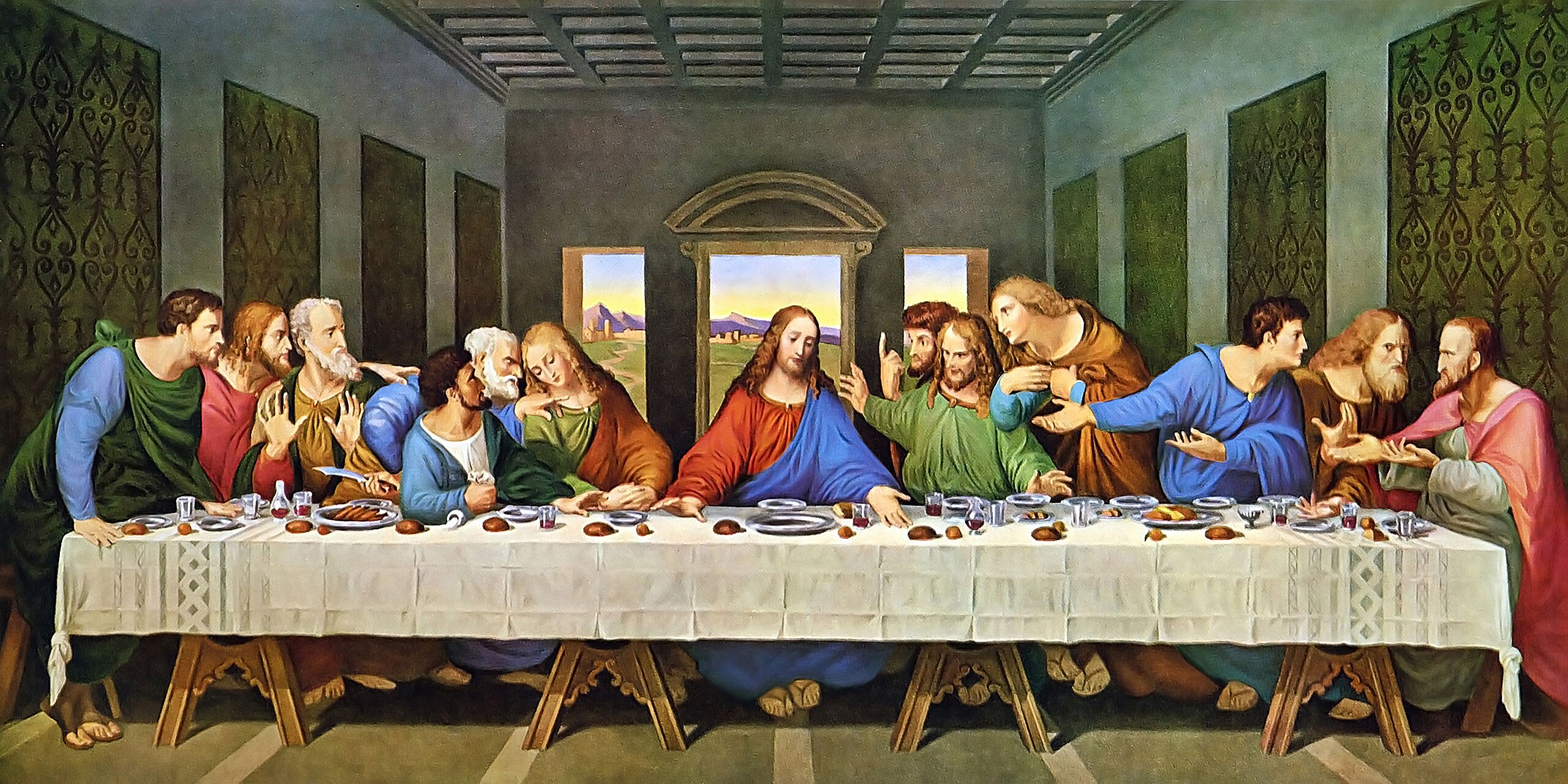
Jesus in Islam and Christianity - Half the World Reveres Him, But Few Know Why
By Daisy Khan
Mustafa Akyol didn't set out to bridge the world's two largest religions. He began as a journalist and writer in Turkey, covering political issues around the Muslim world. But his engagement with Islam's connection to the other Abrahamic faiths led him to author The Islamic Jesus in 2017. As a senior fellow at the Cato Institute focusing on the intersection of public policy, Islam, and modernity, Mustafa has contributed to the New York Times, taught at Boston College, and been listed among the world's top 50 thinkers by UK Prospect Magazine. His work reveals what 4.6 billion people believe about Jesus across Christianity and Islam, representing 56% of the global population.
The facts are startling. Jesus appears 93 times in the Quran across 15 different chapters. He's called Messiah 11 times, word of God, and spirit of God. Both Christians and Muslims affirm his virgin birth to Mary. Yet most Christians have never learned what Islam teaches about Jesus. Most Muslims don't realize how much their tradition shares with Christianity. In this episode of WISE Women with Daisy Khan, Mustafa and host Dr. Daisy Khan explores the historical roots, theological differences, and surprising connections between how these two faiths understand the same figure.
Jesus the Jewish Reformer Under Roman Occupation
Jesus was born into a Jewish environment during a time when the Jewish people were subjugated by the Roman Empire. This created tension, soul-searching, and different directions within the community. Jewish historian Josephus and other sources document that some Jews collaborated with Rome. Others were militants fighting Roman domination. Some were mystical people seeking truth in the desert.
Jesus emerged as a Jewish reformer calling his fellow Jews to reform themselves. He wasn't a militant rebel, but he didn't collaborate with Rome either. He tried to uplift his people and saw internal change as the most important vehicle for political change. A few were convinced and became disciples who carried out the message. The term Messiah held different meanings. Jews believed Messiah would bring redemption to the Jewish people and defeat their enemies as a human figure. Christians developed the concept of Christ as the divine savior. The Quran repeatedly defines Jesus as al-Masih, the Messiah, but never explains what it means, insisting he's a servant of God and a human. An extraordinary human, but still human.
This brings Islam theologically closer to Judaism. The fact that Jesus was crucified according to the New Testament matters because crucifixion was something Romans imposed on political criminals and rebels. Whether he intended to be or not, his message made him a troublemaker in the eyes of both the religious establishment and Rome. A Catholic priest recently appeared on The View and stated a historical fact that Jesus was a Palestinian Jew. He received hate mail and death threats. People couldn't wrap their heads around this basic reality about ethnic identity. Yet understanding Jesus as a Jew who became a reformer within Judaism is essential to understanding his entire mission.
Christianity Departs from Its Jewish Roots
According to the New Testament, Mary was a virgin who miraculously became pregnant. The Quran confirms this virgin birth. Muslims and Christians are the only people who affirm the virgin birth of Jesus. In fact, Muslims sometimes believe it more literally than some progressive Christians. Jesus was born in Bethlehem but lived in Nazareth in northern historical Palestine. His family saved him from the massacre of innocents when Romans went after the Jewish community seeking to kill the prophesied king.
Around age 30, Jesus began his public ministry. John the Baptist baptized him, affirming he was the awaited one. For perhaps three years, Jesus preached around Judea and Samaria in what is now the West Bank. People were mesmerized. He made miracles. He preached with stunning goodness like turn the other cheek. There must have been something extraordinary about this man. All the people who claim Jesus was just one of many Jewish rebels fighting Rome at the time miss the point entirely. We don't know about those other people. But we know about Jesus because his teachings and sermons were remarkable for any religion.
After his death, one figure changed everything. Paul had never met Jesus but had a vision on the road to Damascus. He began spreading the good news of salvation to non-Jews, the Gentiles. He traveled around the Aegean region, wrote letters to new communities, and went all the way to Rome. Paul believed this message was relevant not just for Jews but for everyone. The Jewish side of the movement eventually died out. The message to Gentiles took hold, and Christianity became a Gentile religion. Tensions emerged. Should new Christians be circumcised? Can they eat with Jews? Paul led that transition. Christianity departed from its Jewish roots and planted itself in Hellenistic soil. When Rome brutally destroyed the Jewish temple, Jews entered centuries of exile. Christianity, initially persecuted by Rome, eventually became the Roman religion and conquered the world.
Jesus in the Quran With Archaeological Proof
The Quran shows incredible respect for Jesus. He's praised repeatedly. His miracles are told, some matching the New Testament and some not appearing in the Bible at all. In one Quranic account, Jesus takes a piece of clay, shapes it into a bird, breathes into it, and it becomes a living bird that flies away. When Mustafa tells this to Christian friends in America, they've never heard it. It's not in the Bible. But if you read the Infancy Gospel of Thomas, you find a version of that same story. These Eastern gospels didn't make it into the New Testament, but the Quran preserves them.
The Quran tells the story of Mary's birth under a palm tree rather than in a stable. Mary goes away from people alone. She's in pain under the palm tree when God creates miracles for her. Water springs beneath the tree. Dates fall from the palm. When she returns to her people with baby Jesus, they blame her for having a child while unmarried. Jesus speaks from the cradle as his first miracle, defending his mother against slander. He declares he is blessed when born, as he lives, and when raised up.
In the 1990s, Israeli archaeologists discovered ruins of a Byzantine church called Kathisma just outside Jerusalem while building a road. This ancient church was dedicated to Mary, called the Seat of Theotokos. When they excavated the mosaics, they found images of a palm tree with dates and water springing out. A Christian church depicting exactly what the Quran describes about Mary's birth story. This shows Islam is connected to existing Christian traditions that didn't become mainstream. What became official Christianity was not the only strain. There were diverse Christian texts and beliefs that the Quran apparently drew from or confirmed.
Key Facts About Jesus in Islam:
Appears 93 times in the Quran across 15 chapters
Called Messiah (al-Masih) 11 times
Titled word of God, spirit of God, sign, mercy, witness
Virgin birth to Mary affirmed exactly as Christianity teaches
Spoke from the cradle to defend Mary against slander
Performed miracles, including giving sight to the blind, raising dead, and creating living bird from clay
Empty grave reserved next to Prophet Muhammad in Medina for when Jesus returns
Islamic tradition teaches he will return as a just ruler, die naturally, and be buried as a human
What Jesus Would Say to Our Divided World
If Jesus arrived today with violence spreading across the world, what would his message be? Mustafa offers a challenging answer for all three Abrahamic faiths. Maybe he would tell some followers of Christ who think they should bomb countries and be hateful of other people that it's not his way. To Muslims, he would remind them about the spirit of the law versus the letter of the law. To Jews, he would recall the noble teaching "do not wrong a stranger because you were strangers in Egypt." Turn past persecution into empathy and mercy, not revenge and cruelty.
Even famous historical figures like Isaac Newton and John Locke were skeptical of the Trinity doctrine. There have been strains like Arianism and Jewish Christianity that were not Trinitarian. The Trinity isn't even clearly stated in the Bible right away. It developed over centuries through church councils and theological debates. Christians have differed immensely on the nature of Christ from the very beginning. Understanding these diverse interpretations doesn't weaken faith. It strengthens our ability to find common ground.
The biggest lesson Jesus taught was challenging religious establishments obsessed with laws but lacking mercy. When Pharisees brought an adulteress to Jesus, he called for compassion and said let anyone without sin cast the first stone. This message remains urgently needed. We should not divide into rigid sects, focus on blind literalism, impose harsh punishments, or equate piety with visible religious performance. If Jesus were alive today, he would call us back to our better angels, modesty, humility, and peacemaking.
Mustafa Akyol's The Islamic Jesus is available on Amazon, Barnes & Noble, and wherever books are sold. Muslims should read the New Testament to learn more about Jesus as a historical source and religious reformer. Christians should explore what the Quran teaches about this figure they revere. When we discover how much we share, walls between communities start dissolving. Jesus already built the bridge between these faiths. We just need the courage to walk across it.
Listen to the complete podcast on WISE Women with Daisy Khan – because every story matters. The journey ends not with what we acquire but with what we become. The qualities that sustain us through difficulty often become the very gifts we offer to the world. For more such inspiring stories and discussion, like, follow, and connect with Dr Daisy Khan.
#WISEWomenwithDaisyKhan #WISEWomen #Jesus #IslamicJesus #MustafaAkyol #Christianity #Islam #InterfaithDialogue #Messiah #VirginMary #ChristianMuslimUnity #AbrahamicFaiths #ReligiousHistory #HistoricalJesus #Quran #NewTestament #Peacemaking #BetterAngels #ByzantineChurch #ArchaeologicalEvidence
Connect with Dr. Daisy Khan:
Instagram: https://www.instagram.com/WISEwomenwithdaisykhan/
Facebook: https://www.facebook.com/profile.php?id=61576656401275
Connect with Mustafa Akyol:
Mustafa Akyol is a Turkish journalist, author, and public intellectual focused on the intersection of Islam, liberty, and modernity. He studied political science and history at Boğaziçi University and has written opinion columns since the early 2000s for leading publications including Hürriyet Daily News, Al-Monitor, and The New York Times.
Akyol is the author of several books, most notably Islam Without Extremes: A Muslim Case for Liberty, which was long-listed for the Lionel Gelber Prize and praised by the Financial Times for its defense of freedom. His later work, The Islamic Jesus, received wide critical acclaim across major international outlets.
A sought-after speaker, Akyol has presented at TED and appeared on programs including the BBC and CNN. He is a senior fellow at the Cato Institute, where he researches public policy, Islam, and global liberty.
Where Muslim voices rise, bridges are built, and history's unsung heroines reclaim their light.
WISE Women with Daisy Khan gives voice to Muslims sharing their experiences with anti-Muslim bias, educates non-Muslims to become upstanders against discrimination, and spotlights extraordinary women throughout history whose contributions have been erased. We reclaim faith as a force for good while building bridges between East and West—transforming fear into understanding, one conversation at a time.
In a world where misinformation silences too many voices, we break through the noise by creating space for authentic dialogue. Muslims share their experiences, grievances, and hope for a better future, turning pain into a powerful conversation that demands to be heard.
Our episodes are designed to educate and empower non-Muslims to reject stereotyping and discrimination when they see it. We believe understanding begins with listening, so we challenge disinformation with knowledge and empathy, equipping people to become courageous upstanders.
We revive the legacy of luminary women who shaped civilizations yet were erased from history's
pages—a reminder that women have always been shapers of civilizations, despite attempts to erase their contributions.
At its heart, WISE Women confronts the distortion and weaponization of religion for political gain, reclaiming faith as a force for justice, equality, and empowerment.
This isn't just another podcast—it's a bridge between communities taught to fear each other, between the world as it is and the world as it could be. We're opening hearts and minds, building the understanding our divided world desperately needs.
Welcome to WISE Women. Where wisdom meets courage, and voices become bridges.
News [Source: CBS Evening News]
A man sent a hateful message to a Muslim candidate. He responded with a call for help, article by Steve Hartman
https://www.cbsnews.com/news/a-man-sent-a-hateful-message-to-a-muslim-candidate-he-responded-with-a-call-to-help/
Comments