



Malcolm X to Mamdani: A Muslim Researcher Maps a Community’s Political Power
By Daisy Khan
A Black History Month assignment in Madison, Wisconsin, changed everything. Asked to write about a civil rights leader, a public school student picked up The Autobiography of Malcolm X and discovered he was Muslim. She had not known Muslims were part of America long before her Egyptian immigrant family arrived.
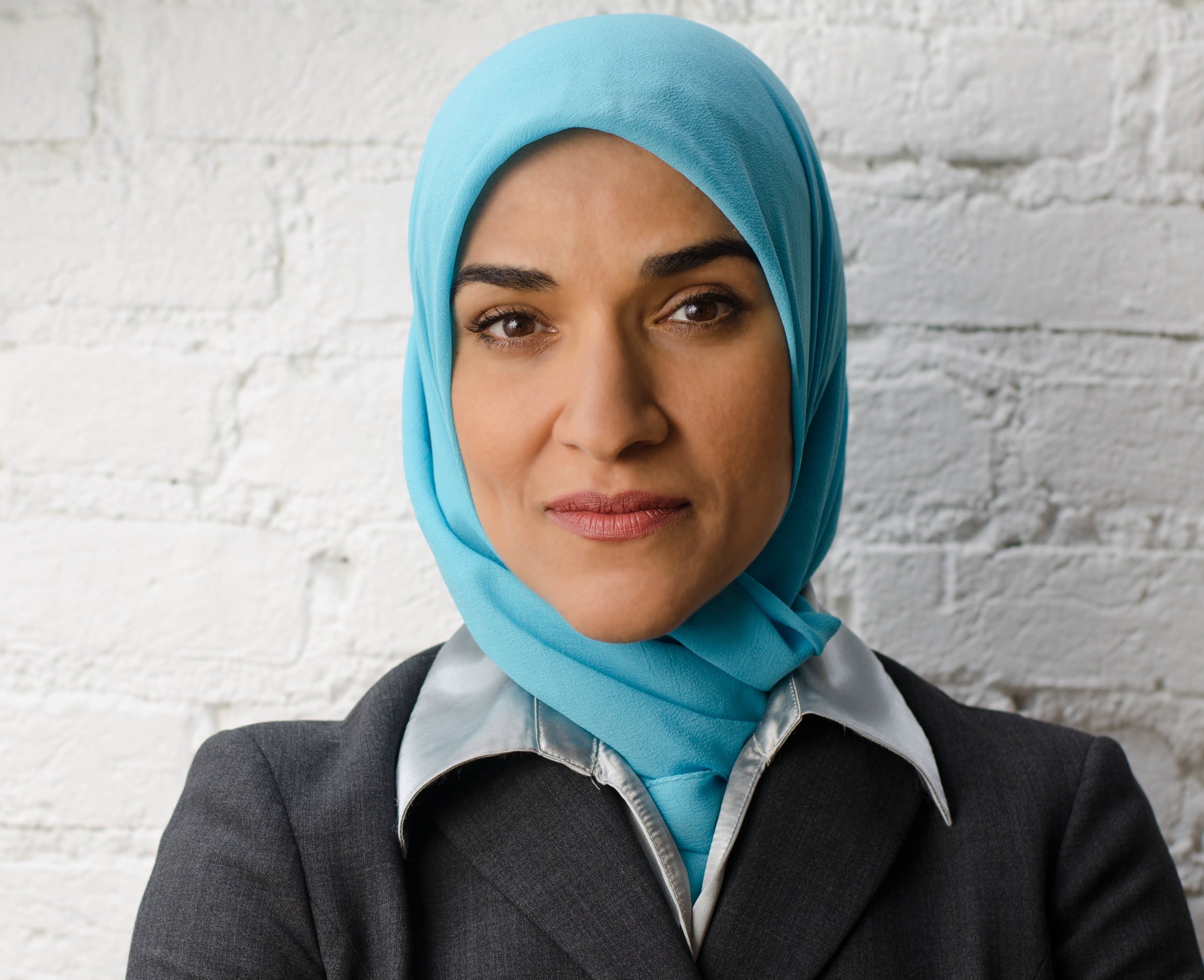
That book helped shape Dalia Mogahed into one of the most influential Muslim voices in the United States: a researcher who spent six years interviewing 50,000 Muslims across 35 countries, former Executive Director of the Gallup Center for Muslim Studies, former Director of the Institute for Social Policy and Understanding, and co-author of Who Speaks for Islam? What a Billion Muslims Really Think.
One myth dominates American views of Muslims: that Muslim women are oppressed. On this point, many people on the right and the left agree. Dalia’s research contradicts that assumption. Most Muslim women worldwide say their faith liberates them. They want equal rights and believe the path to those rights runs through Islam, not around it. Narratives that cast Muslim women only as victims do not match what women themselves report. In this episode of WISE Women with Daisy Khan with host Daisy Khan, Dalia traces her journey and explains what six years of research, a 300 percent surge in youth turnout for Mamdani, and a rapid rise in civic engagement reveal about Muslim women, political power, and America’s future.
The Book That Unified Three Identities
Dalia grew up in a religious home shaped by science. Her parents were practicing Muslims who were also scientists and who stressed academics. Religion often felt like a set of rules she inherited more than a path she chose.
When she read The Autobiography of Malcolm X for a school assignment, she discovered both Islam’s deep roots in America and its role in the civil rights struggle. She stopped seeing herself simply as a Muslim living in America and started seeing herself as an American Muslim. Her Egyptian, American, and Muslim identities began to feel coherent rather than competing.
Malcolm’s story also linked her passion for justice to her faith. Until then, Islam had mainly meant praying and avoiding forbidden things. Through his life, she encountered an understanding of Islam that engages oppression and calls for liberation.
After that, she read the Quran for herself as an explorer. She found a message centered on human dignity and freedom. That insight ignited a desire to work for the uplift of people in many settings.
She majored in chemical engineering and was the only woman in her department who wore a hijab. At 17, just before college, she chose a hijab as a result of reading the Quran. On campus, she wrote about Islamophobia and Palestine, co-founded Truth in the Middle East to organize educational events, and raised awareness about the Bosnian genocide. She studied engineering while also committing herself to this work.
Six Years, 50,000 Interviews, Data America Ignores
After college, Dalia married and had her first child. Then 9/11 happened. Newly settled in Pittsburgh, she and her family were unsure it was even safe to attend Friday prayers. When they went, they found the mosque filled with non-Muslim neighbors who came to stand in solidarity. That moment pushed her back into activism as a cultural and religious translator.
Simultaneously, laws such as the Patriot Act and the authorization for the Iraq War were passing. It was easy to feel that the country was turning against Muslims. What kept her engaged was her faith and the example of Prophet Muhammad, who continued to teach and stand for truth in the face of hostility.
She often returns to a Quranic principle: cooperate in what is good and just, and do not cooperate in sin and aggression. For her, this means building coalitions and honoring people’s humanity while refusing arrangements that demand she abandon her values or set aside justice.
Her book Who Speaks for Islam? grew out of six years of research and 50,000 interviews in 35 countries. The clearest gap between perception and reality concerned women. Many in the United States assume Muslim women are uniformly oppressed. Her data showed something else. Misogyny exists in Muslim communities, as it does elsewhere, but most Muslim women say they love their faith and see it as a source of strength. They want equal rights and believe their faith can deliver those rights.
They are aware of global conversations about equality and want the same opportunities others have. Where they differ from common Western assumptions is in how they see the route to those goals. They do not believe equality requires them to abandon Islam. They see equality as compatible with their faith and as something grounded in it.
Youth Turnout Shows Candidate Quality Matters
American Muslim civic engagement has grown quickly. In 2016, only 60 percent of American Muslims were registered to vote. By 2025, that number had risen to 85 percent. No other group matched that pace of growth in such a short period.
Muslims now participate in campaigns, town halls, and calls to representatives more than ever before. In some measures, they even outpace other faith communities.
The community still struggles with infrastructure, especially in times of crisis. For two years, people have watched what many describe as a genocide unfold on their phones. The American Muslim response has often been passionate but fragmented, with efforts that are reactive and loosely coordinated. There is still no strong shared structure to educate and mobilize people at scale.
On an individual level, Muslims have had success running for office and gaining influence. Turning those individual wins into organized, lasting power remains unfinished work.
This context makes Mamdani’s campaign striking. His race brought a fresh sense of possibility. Turnout among 18 to 29 year olds rose by 300 percent. That surge suggests young people will vote when a candidate reflects their priorities and speaks to their real concerns.
When ISPU surveys people who do not vote and asks why, the most common response is a lack of candidates who genuinely represent their concerns. The problem is not only apathy. Many people simply do not see a meaningful choice on the ballot.
For many women, especially older ones, Mamdani’s race changed what felt possible. Some had never registered or voted, convinced their vote did not matter. When they were encouraged to register and then saw the outcome, they experienced their own political power in a new way. That shift marked a turning point in Muslim civic participation.
Key Data Points on Muslim Civic Engagement
• Voter registration rose from 60 percent to 85 percent between 2016 and 2025
• No other American community matched that pace of civic growth
• Turnout among 18 to 29 year olds increased by 300 percent for Mamdani
• Most common reason for not voting: “No one represents my actual concerns”
• Muslim women are less likely than Muslim men to be registered or to vote
• Individual Muslims often navigate power successfully while collective infrastructure still lags
• Crisis response is often reactive and fragmented even when local organizing is strong
Women Break Barriers While Grassroots Participation Lags
Women’s political leadership is rising. Figures such as Senator Hashmi signal a new reality. Their presence can help the community grow and challenge the persistent idea that Islam mistreats women.
Dalia welcomes this rise, yet sees a gap. Data show Muslim women are still less likely than men to register and vote. A few women reach visible positions and break glass ceilings, but that success has not yet translated into broad participation at the neighborhood level.
She also notes how the broader public often reacts. High profile Muslim women in politics or public life are sometimes treated as rare exceptions, while the stereotype of the oppressed Muslim woman remains untouched. Being the first or only in a space makes it easy for observers to treat them as outliers instead of evidence of wider change.
To shift this pattern, she argues that the public needs better information about Muslim women and that Muslim women need greater support for everyday civic involvement. That means telling fuller stories about their lives and work, and encouraging participation that is not limited to cameras and stages.
To younger Muslim women who want to lead and feel pulled between authenticity and expectations, whether social or communal, Dalia offers steady advice. You have a purpose on this earth that is larger than social media validation or perfection in family roles. You are here to serve a higher mission. When you focus your energy on that mission, other pieces of life can fall into place.
She carries with her a Quranic verse that she returns to again and again: We have sent down the Quran as a healing and a mercy. When her heart feels heavy, she remembers that her tradition offers a standing source of comfort and strength, ready to be drawn upon.
Listen to WISE Women with Daisy Khan because every story matters. The qualities that sustain us through difficulty often become the very gifts we offer to the world. Like, follow, and connect with Dr Daisy Khan.
#WISEWomenwithDaisyKhan #WISEWomen #DaliaMogahed #MuslimWomen #MalcolmX #VoterRegistration #CivicEngagement #Gallup #ISPU #WhoSpeaksForIslam #MuslimVoters #Mamdani #IslamicFeminism #Liberation #EqualRights #AmericanMuslim #PoliticalParticipation #YouthTurnout #MuslimLeadership #FaithAndFeminism #BlackMuslimSolidarity #CoalitionBuilding
Connect with Dr. Daisy Khan:
Websites:
Follow WISE Women with Daisy Khan:
Connect with Dalia Mogahed:
Dalia Mogahed is a scholar at the Institute for Social Policy and Understanding and CEO of Mogahed Consulting. She previously served as Director of Research at ISPU and Executive Director of the Gallup Center for Muslim Studies, where she led analysis of surveys examining Muslim communities worldwide. She co-authored the groundbreaking book Who Speaks for Islam? What a Billion Muslims Really Think with John L. Esposito. President Barack Obama appointed her to the President's Advisory Council on Faith-Based and Neighborhood Partnerships in 2009. She has testified before the U.S. Senate Committee on Foreign Relations, and her 2016 TED Talk was named one of the top TED Talks of the year. Dalia co-hosts the Quran Conversations podcast and explores the intersection of faith, identity, and belonging through research that challenges misconceptions and builds understanding across communities.
WISE Women with Daisy Khan
Where Muslim voices rise, bridges are built, and history's unsung heroines reclaim their light.
WISE Women with Daisy Khan gives voice to Muslims sharing their experiences with anti-Muslim bias, educates non-Muslims to become upstanders against discrimination, and spotlights extraordinary women throughout history whose contributions have been erased. We reclaim faith as a force for good while building bridges between East and West, transforming fear into understanding, one conversation at a time.
We challenge disinformation with knowledge and empathy, confronting the weaponization of religion for political gain. This isn't just another podcast. It's a bridge between communities taught to fear each other, opening hearts and minds to build the understanding our divided world needs.
Welcome to WISE Women. Where wisdom meets courage, and voices become bridges.
News [Source: CBS Evening News]
A man sent a hateful message to a Muslim candidate. He responded with a call for help, article by Steve Hartman
https://www.cbsnews.com/news/a-man-sent-a-hateful-message-to-a-muslim-candidate-he-responded-with-a-call-to-help/
Comments