




Ramadan in Islam: Why Muslims Fast and What the Soul Awakens
By Daisy Khan
The world does not slow down for hunger. Emails still arrive. Traffic still roars. Deadlines still press. Yet for one month each year, nearly two billion Muslims reorder their days around an unseen rhythm. They wake before dawn. They close their lips to food and water. They measure sunset with longing.
This is Ramadan, and it answers a question many ask each spring: why do Muslims fast?
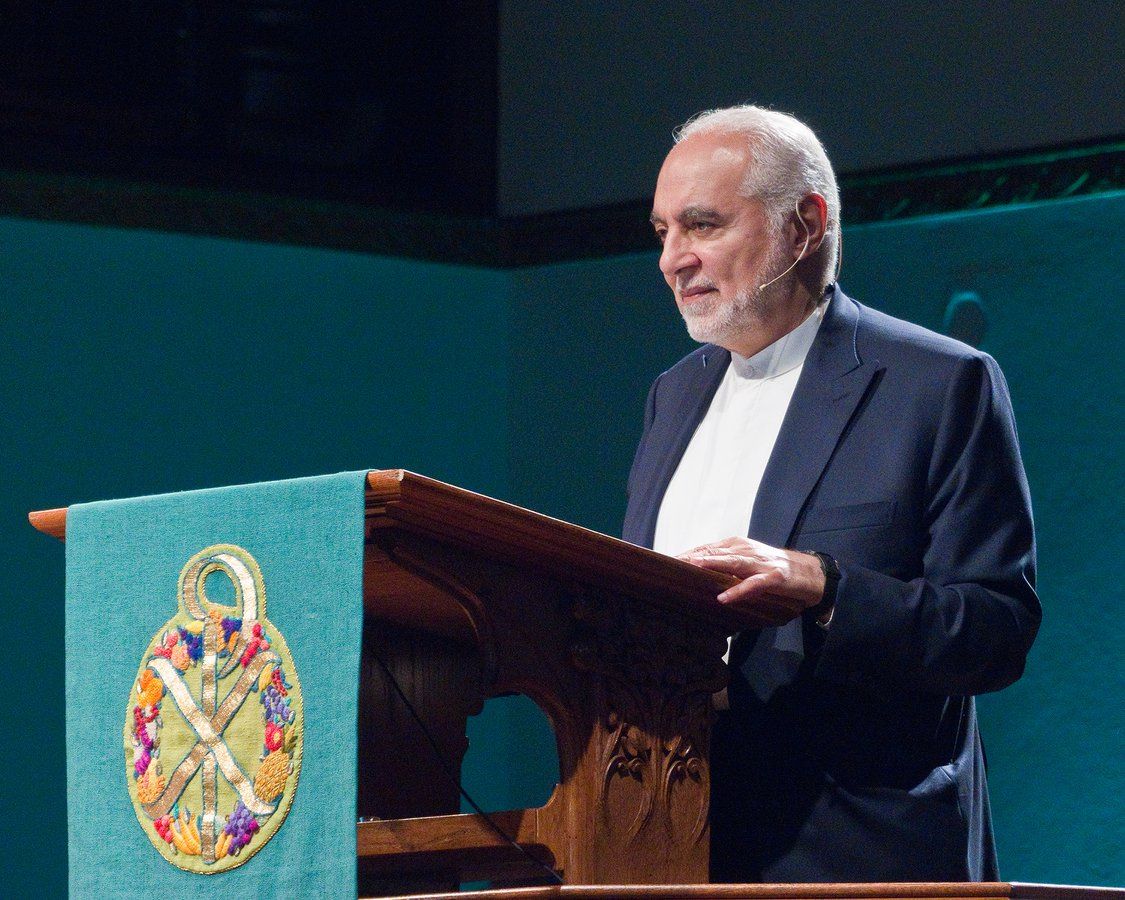
In this episode of WISE Women with Daisy Khan with host Dr. Daisy Khan, Imam Feisal Abdul Rauf offers a grounded and expansive introduction to what this month truly means. As imam of Masjid Al Farah in downtown New York City and founder of the ASMA Society and the Cordoba Initiative, he has spent decades shaping Muslim-West dialogue through scholarship, spirituality, and public engagement. His voice carries theological depth and civic awareness.
Ramadan is often reduced to hunger or ritual. Critics misunderstand it. Casual observers exoticize it. Yet fasting in Islam is not about punishment of the body. It is about liberation of the soul. It is about reclaiming discipline in an age that profits from distraction, reclaiming mercy in a world addicted to outrage, and reclaiming community in societies fragmented by suspicion.
Ramadan in the Islamic Lunar Calendar
Ramadan is the ninth month of the Islamic lunar calendar. Because the lunar year is shorter than the solar year by approximately eleven days, Ramadan shifts earlier each year. Over time, it rotates through every season.
This movement is not an inconvenience. It is equity. No generation is assigned only short winter days. No generation is burdened only with long summer fasts. The discipline circulates through heat and cold, daylight and darkness, reminding believers that devotion is not seasonal.
The month is sacred because it marks the beginning of revelation. During Ramadan, the first verses of the Quran descended. In a cave outside Makkah, the Prophet Muhammad, peace be upon him, was commanded to read. Read in the name of your Lord who created. Read, and your Lord is most noble, who taught with the pen.
Ramadan therefore begins with knowledge, not hunger. It begins with awakening, not deprivation. The fast trains the body, but revelation trains the conscience.
The Spiritual Benefits of Fasting
Fasting in Ramadan requires abstaining between dawn and sunset from food, drink, smoking, and sexual intimacy. Yet Imam Feisal Abdul Rauf insists the physical discipline is only the doorway.
Modern life conditions human beings to react instantly. Notifications demand attention. Advertising cultivates appetite. Anger spreads faster than reflection. Fasting interrupts this pattern.
When the body quiets, something deeper becomes audible. Hunger slows impulse. Thirst sharpens awareness. A person may feel anger rising and choose not to obey it. You begin to observe yourself. You realize that you are not identical with your cravings.
This is moral training.
The Prophet taught that strength is not measured by overpowering another person, but by mastering one’s own anger. Ramadan strengthens willpower. It builds resistance against impulse. It exposes how often we eat out of habit rather than need, speak out of ego rather than wisdom, and consume out of boredom rather than hunger.
In a culture that markets indulgence as freedom, Ramadan argues the opposite. Discipline is freedom. Restraint is dignity. Mastery of self is empowerment.
Imam Feisal also recalls the physical dimension of fasting. Long before wellness trends promoted intermittent fasting, physicians observed restorative effects in supervised fasting. Islam never framed fasting as bodily harm. It framed it as a benefit.
Ramadan Fasting and Its Shared Roots in Judaism and Christianity
The Quran states that fasting was prescribed for Muslims as it was prescribed for those before them. This continuity matters.
Jews fast on Yom Kippur. Christians observe Lent. Across traditions, fasting refines gratitude, sharpens repentance, and reduces attachment to excess. It equalizes rich and poor before hunger. It humbles the body so that the heart can rise.
Islamic law reflects both discipline and mercy. Early practice included more restrictive patterns. Later revelation clarified that nourishment and intimacy were permitted between sunset and dawn. The fast is rigorous, but it is not cruel.
In hot climates, thirst becomes the greater test. Yet every sunset carries relief. Each day becomes a cycle of restraint and mercy. Accountability by day. Forgiveness by night.
This rhythm offers something radical in a punitive age. Divine law is not humiliation. It is formation.
Many Fast and Gain Nothing But Hunger and Thirst
The Prophet warned that some people fast yet gain nothing except hunger and thirst. The difference is intention, niyyah.
Ramadan reshapes communities. Mosques fill for tarawih prayers. Families gather for iftar meals. Non Muslim neighbors are invited to break bread together. Public iftars in American cities have become acts of bridge building, countering narratives that paint Muslims as insular.
Charity intensifies during Ramadan. Feeding a fasting person carries a reward. Acts of generosity multiply.
Core dimensions of Ramadan practice include
Fasting from dawn until sunset for twenty nine or thirty days
Seeking Laylat al Qadr, the night of power linked to the first revelation
Expanding charitable giving, including feeding those who fast
Performing tarawih prayers in congregation
Renewing the intention to gain piety and God consciousness
Seeking forgiveness nightly
Experiencing the two joys described in Prophetic tradition, one at breaking the fast and one at meeting the Lord
Laylat al Qadr, the night of power, carries profound weight. The Quran describes it as better than a thousand months. In spiritual language, that means one night of awakened devotion outweighs a lifetime of routine worship. It is the night when revelation first descended, when destiny is recalibrated, when angels are said to descend with peace until dawn.
For believers, this is not superstition. It is urgency. It is a reminder that transformation can happen in concentrated moments. That history can pivot in a single night. That a human being can pivot in a single prayer.
Ramadan is not automatic purification. It is an invitation. It asks: What do you seek? Mercy. Discipline. Clarity. Forgiveness. A reset.
What Ramadan Offers a Consumer Driven World
Modern culture rewards appetite. It monetizes distraction. It amplifies outrage. Ramadan resists all three.
It slows consumption.
It disciplines reaction.
It creates structured empathy through shared hunger.
When civic leaders fast alongside Muslim neighbors, stereotypes weaken. When families gather nightly, isolation decreases. When believers restrain anger and appetite, society benefits.
Ramadan reminds humanity that the soul must lead the body, not the other way around. It reminds communities that mercy is stronger than suspicion. It reminds individuals that self mastery is the foundation of social justice.
The take home message is clear. Fasting is not about food. It is about freedom from what controls you. It is about aligning appetite with conscience. It is about remembering that revelation began with a command to read, to know, and to awaken.
Listen to WISE Women with Daisy Khan because every story matters. The qualities that sustain us through difficulty often become the very gifts we offer to the world. For more inspiring stories and discussion, like, follow, and connect with Dr Daisy Khan.
#WISEWomenwithDaisyKhan #WISEWomen #Ramadan #Ramadan2026 #WhatIsRamadan #WhyDoMuslimsFast #RamadanInIslam #LaylatAlQadr #FastingInIslam #SpiritualBenefitsOfFasting #IslamExplained #IslamicSpirituality #Interfaith #InterfaithDialogue #MuslimVoices #MuslimCommunity #Iftar #Zakat #CharityInRamadan #Peacebuilding
Connect with Dr. Daisy Khan:
Websites:
Follow WISE Women with Daisy Khan:
Connect with Imam Feisal Abdul Rauf:
Imam Feisal Abdul Rauf is an American Muslim leader, author, and interfaith advocate whose work has shaped Muslim-West relations for more than two decades. He is the founder and chief executive of the American Society for Muslim Advancement and the Cordoba Initiative, organizations dedicated to fostering dialogue, pluralism, and ethical leadership across faith communities. Imam Feisal serves as imam of Masjid Al Farah in New York City and has long been a prominent public voice calling for principled engagement, religious literacy, and peaceful coexistence. He is the author of several books, including What’s Right with Islam: A New Vision for Muslims and the West. A graduate of Columbia University with advanced study in physics, he bridges spiritual scholarship with intellectual rigor, advancing a vision of Islam rooted in mercy, justice, and responsible civic participation.
WISE Women with Daisy Khan
Where Muslim voices rise, bridges are built, and history's unsung heroines reclaim their light.
WISE Women with Daisy Khan gives voice to Muslims sharing their experiences with anti-Muslim bias, educates non-Muslims to become upstanders against discrimination, and spotlights extraordinary women throughout history whose contributions have been erased. We reclaim faith as a force for good while building bridges between East and West, transforming fear into understanding, one conversation at a time.
We challenge disinformation with knowledge and empathy, confronting the weaponization of religion for political gain. This isn't just another podcast. It's a bridge between communities taught to fear each other, opening hearts and minds to build the understanding our divided world needs.
Welcome to WISE Women. Where wisdom meets courage, and voices become bridges.
News [Source: CBS Evening News]
A man sent a hateful message to a Muslim candidate. He responded with a call for help, article by Steve Hartman
https://www.cbsnews.com/news/a-man-sent-a-hateful-message-to-a-muslim-candidate-he-responded-with-a-call-to-help/
Comments