




The First Amendment Was Written for Every Faith. American Muslims Are Keeping It That Way.
By Daisy Khan
Religious freedom for American Muslims in 2026 has a quiet exception the Constitution never wrote. In Texas, a governor branded a planned Muslim housing and mosque community a "Sharia city" and moved to block its construction. The community already owned the land. Zoning was approved. Every document the First Amendment requires was in order, and the residents were American families, many of them second and third generation, who had built their lives exactly as any religious community in this country is supposed to. The project has become the latest flashpoint in a years-long legal war over Islam's status as a religion under American law.
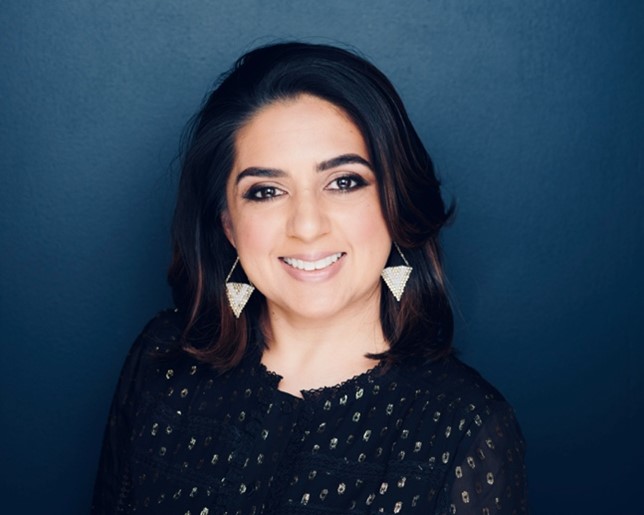
This pattern is not an accident. It is the precise legal and rhetorical strategy Asma Uddin has been mapping for over a decade. A religious liberty lawyer who has argued cases at the United States Supreme Court, Asma is the author of When Islam is Not a Religion and The Politics of Vulnerability, and she has represented religious communities across traditions. On WISE Women with Daisy Khan, host Dr. Daisy Khan sits down with her to unpack how a coordinated effort has steadily tried to remove Islam from the protections the First Amendment guarantees every other faith, and how American Muslims are organizing to close that gap permanently.
The conversation moves across zoning battles in Plano, courtroom data from the post-9/11 decade, interfaith coalition building, and a vision of an American Muslim future that Asma describes as super ordinary.
The Legal Trick Designed to Disqualify a Faith
The strategy at the center of Asma Uddin's work hides in plain sight. Anti-Muslim political actors have claimed for years that they are the ultimate defenders of religious freedom, right up until Islam enters the conversation. The 2016 presidential campaign crystallized the contradiction. Republican candidates competed with each other to claim the mantle of religious liberty while simultaneously proposing Muslim registries, mosque surveillance programs, and outright travel bans. The maneuver required one specific legal move. If Islam could be reclassified as something other than a religion, then the entire First Amendment apparatus would simply cease to apply to Muslim Americans.
Asma traces this logic through her book and her courtroom work. One American think tank has assigned a numerical estimate, claiming only twelve percent of Islam qualifies as religion while the rest is politics. Former members of federal religious freedom commissions have publicly echoed versions of this framing. The argument is not academic. It shapes zoning commission hearings, court filings, political campaigns, and media coverage. Each place this rhetoric lands, the protective shield of the First Amendment develops another crack that applies to American Muslims alone. The trope itself runs back to the Crusades, and it has shaped American political imagination about Islam ever since.
Two Clauses, Two Frontlines, One First Amendment
The First Amendment contains two religion clauses that were designed to operate in tandem. The Free Exercise clause protects individuals and institutions against government interference with religious practice. The Establishment clause prevents the state from favoring or disfavoring one religion against another. A hijab ban would violate the first. Singling out Muslim communities for zoning denials while approving every other faith's projects would violate the second. Both clauses are under direct pressure right now, and Texas sits at the center of the storm.
The East Plano Islamic Center secured its land and its zoning approval through the proper channels, yet elected officials continue to brand the project a threat. Supreme Court precedent offers a concrete response. In the Masterpiece Cakeshop ruling, the court found that anti-religious animus from government officials was itself enough to constitute a Free Exercise violation. Four Muslim schools in a separate Supreme Court case successfully argued that denying them public vouchers available to other religious schools violated the Constitution's guarantee that religious status cannot be grounds for discrimination. Those schools ultimately received the funding. The legal tools exist. American Muslims are learning to use them.
When Judges Rule Against Muslims at Twice the Rate
Empirical data from the decade after 9/11 tells a stark story. Academic studies of religious liberty cases found that Muslim claimants were roughly half as likely to prevail in court compared to claimants from other faiths. Judges are human. They operate inside a cultural atmosphere saturated with stereotypes about Muslims and security risks, and many of the Muslim cases studied came from incarcerated claimants, which doubled down on public associations between Islam and violence. More recent research segmented federal judges by the administration that appointed them. Trump-appointed judges were found to be the least likely to rule in favor of minority religious claims, and Muslim claimants faced the steepest barriers of any group studied.
Asma connects the courtroom data back to the political rhetoric in a framework one scholar calls dialectical Islamophobia. When government officials legitimize anti-Muslim talking points, the effect ripples outward into daily life. Ordinary citizens interpret the official permission as a green light to discriminate, harass, or engage in acts of violence against Muslim neighbors. The rhetoric creates the conditions on the ground. The rhetoric also shapes the judges who will later rule on the consequences. Reversing the cycle requires action at every level of public life, not only inside the courtroom.
The Playbook Building an American Muslim Future
Asma is direct that lawsuits alone cannot solve the problem. American Muslims have to seize the present legal moment while simultaneously building civic, political, and cultural infrastructure that lasts. Her recommendations for community leaders and allies are specific and actionable, and they begin with a rejection of the old defensive posture. The work ahead is less about explaining Islam to skeptics and more about asserting American Muslim identity with confidence and demanding the rights every other religious community already takes for granted.
Four areas where Asma argues American Muslims can build durable power right now:
Make sustained inroads with conservative and faith-based communities who share core values around family, religious practice, and public witness
Understand constitutional rights in depth, learn how to articulate them, and show up at zoning meetings, school boards, and legislative hearings where decisions are actually made
Build coalitions with religiously diverse vulnerable communities, including Catholic, Jehovah's Witness, Jewish, and Mormon Americans whose own histories carry hard lessons about government overreach against faith groups
Shift the public narrative away from defending Islam specifically and toward defending religious pluralism broadly, which mainstreams the issue as a founding American concern rather than a niche grievance
Daisy closes the conversation with a story from 2010, when her own community center project faced a vicious public attack that drew national attention. A Jewish friend told her at the time that defending herself meant defending every faith community that would follow. First the Catholics, then the Jews, now the Muslims, next the Hindus, then the Buddhists. The Constitution's protections rise or fall together. Weakening them against any one faith eventually weakens them against every faith.
That coalition vision is where Asma lands her hope. Religious liberty secured selectively is not religious liberty at all. American Muslims are building the legal sophistication, the political savvy, and the cross-faith relationships to make sure the First Amendment functions for every community it was written to protect. The transformation Asma wants is not spectacular. It is ordinary. American Muslims building mosques without political theater. American Muslims running for office without being smeared as foreign agents. American Muslims living faithful public lives the way every other religious community in the country already does. Ordinary is the goal. Ordinary, after all this fighting, is also the win.
This episode is part of The Muslim Women Project on WISE Women with Daisy Khan, featuring 100 Muslim women of authority shaping their destiny, community, and society at large. Listen to the full conversation wherever you get your podcasts.
Follow Dr. Daisy Khan
Follow Asma Uddin (Author, Assistant Professor of Law, Michigan State University)
Author Bio:
Asma Uddin is an Assistant Professor of Law at Michigan State University, a religious liberty lawyer, and an author who has argued cases at the United States Supreme Court on behalf of religious communities across many faith traditions. She is the author of When Islam is Not a Religion: How a Faith Became a Political Category in American Law and Life, and The Politics of Vulnerability. Her work also spans the Aspen Institute, the Freedom Forum Institute, and a Substack on constitutional rights.
WISE Women with Daisy Khan
Where Muslim voices rise, bridges are built, and history's unsung heroines reclaim their light.
WISE Women with Daisy Khan gives voice to Muslims sharing their experiences with anti-Muslim bias, educates non-Muslims to become upstanders against discrimination, and spotlights extraordinary women throughout history whose contributions have been erased. We reclaim faith as a force for good while building bridges between East and West, transforming fear into understanding, one conversation at a time.
We challenge disinformation with knowledge and empathy, confronting the weaponization of religion for political gain. This isn't just another podcast. It's a bridge between communities taught to fear each other, opening hearts and minds to build the understanding our divided world needs.
Welcome to WISE Women. Where wisdom meets courage, and voices become bridges.
News [Source: CBS Evening News]
A man sent a hateful message to a Muslim candidate. He responded with a call for help in an article by Steve Hartman
https://www.cbsnews.com/news/a-man-sent-a-hateful-message-to-a-muslim-candidate-he-responded-with-a-call-to-help/
#WISEWomenwithDaisyKhan #WISEWomen #AsmaUddin #ReligiousLiberty #FirstAmendment #AmericanMuslims #Islamophobia #MuslimWomenProject #DaisyKhan #ConstitutionalRights #InterfaithSolidarity #WhenIslamIsNotAReligion #ReligiousFreedom #FreeExercise #FaithAndLaw
Comments