



The Quran Mentions Mary More Than The Bible Does and Christians Never Knew
By Daisy Khan
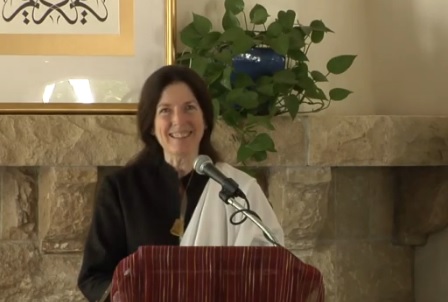
Camille Helminski didn't set out to challenge centuries of religious assumptions. Raised in an interfaith Florida household, she later converted to Islam and spent decades studying Sufism. As co-director of The Threshold Society and author of Women in Sufism: A Hidden Treasure, Camille built a reputation for bridging spiritual traditions. Her latest work, The Way of Mary, reveals a figure both faiths claim but neither fully understand.
Mary appears in The Quran more frequently than in the entire Bible. Islamic scripture dedicates an entire chapter to her (Surah Maryam). Both Christians and Muslims revere her as the supreme example of purity and surrender to God. Yet most Christians have never heard the Islamic version of her story. Most Muslims don't realize how deeply their tradition venerates a figure Christianity claims as its own. In this episode of WISE Women with Daisy Khan, Camille and host Dr. Daisy Khan explores the parts of Mary's story that most people never learn.
Hannah's Garden Prayer and Mary's Destiny
Mary's story begins with her mother Hannah, a devoted woman in the Jewish community who couldn't conceive. Hannah and her husband Joachim were pillars of their faith but remained childless. Joachim went into the desert to beg God for offspring. Hannah stayed in her garden. One day Hannah looked up and saw a sparrow's nest. That small bird had been given young. Hannah had nothing. She cried out to God. Angels appeared to both husband and wife separately with the same message. You will bear a child. When Mary was born, Hannah kept her promise. She dedicated this child to serve in the temple.
Hannah brought three-year-old Mary to the temple under the guardianship of Zachariah. Zachariah would visit Mary in the sanctuary and consistently found her already provided with food. He asked where the meals came from. Mary's response appears in The Quran. See how my Lord provides for whom He will beyond all reckoning. The food arrived out of season. Angels brought the provisions. Witnessing Mary's depth of prayer moved Zachariah to make his own plea for righteous offspring. This is how the story of John the Baptist begins.
Birth by Palm Tree and Speaking From Cradle
The Christian tradition places Jesus' birth in a stable or cave in Bethlehem. The Quranic account tells something different. Mary goes out on her own and finds herself by a palm tree when labor begins. She cries out wishing she had died before this moment. The shame of bearing a child without a husband overwhelms her. A voice calls from beneath her. Grieve not. Your sustainer has provided a stream below you. Shake the trunk of the palm tree, and it will drop fresh ripe dates. Eat, drink, and cool your eyes with tranquility.
Springs opening for Mary repeatedly happens in both Christian and Islamic traditions. Mary receives divine support in her most vulnerable moment. After 40 days, Mary knew she must present the baby at the temple. But how would she explain a child with no earthly father? The Quran describes Mary vowing a fast of words. She points to baby Jesus when people demand answers. Jesus speaks from the cradle as his first miracle. He defends his mother by declaring he brings the Word of God. The baby spoke to protect the mother who had surrendered everything.
Women Stayed When Men Fled
Mary Magdalene was among Jesus' most devoted followers. Later, she became known as the Apostle to the Apostles because of her leadership role. Yet centuries ago, a pope linked Mary Magdalene with a fallen woman despite zero scriptural basis. The designation persisted until 1969, when another Pope finally rescinded it. Mary Magdalene was the first person to witness Jesus' resurrection. He could have appeared to any of the male apostles. He chose a woman.
At the crucifixion, Mary the mother of Jesus and other women stayed near while male disciples fled. Men feared for their lives and ran. Women remained. Women witnessed. Mary gave birth and safeguarded her child through persecution. Mary Magdalene witnessed resurrection and spread the news. Two women bookended the entire ministry of Jesus. Without their courage, Christianity as we know it might not exist. Yet for 1,900 years, one of them was slandered by the very institution she helped create.
Fatima Apparitions and Drawing Lines in Sand
In 1917, Mary appeared to three children in Portugal in a town called Fatima. The town had been named for Fatima, the daughter of Prophet Muhammad, during the time Muslims lived in Spain. Mary appeared as a brilliant light, sharing prayers for peace. People witnessed the sun spinning. Rain fell, but clothes stayed dry. The Hand of Fatima (also called Hand of Miriam or Hand of Mary) exists across all three Abrahamic traditions. Prayer beads in Islam are stranded in sets of 33. Jesus ascended at age 33.
Prophet Muhammad taught Fatima and her husband Ali to recite prayers 33 times each. Muslims still practice this after every prayer. Perhaps the most striking story happened in the seventh century. Early Muslims fled persecution in Mecca and sought refuge with the Christian ruler of Abyssinia, the Negus. Meccans pursued them, demanding their return. The Negus called Jafar, the Muslim leader, to speak. Jafar recited verses from Surah Maryam about Mary and Jesus being holy. The Negus drew a line in the sand. The difference between us and you is less than this line. You are welcome here.
Key Connections Across Abrahamic Faiths:
Mary appears in The Quran more than The Bible, with an entire chapter named for her
Both Christians and Muslims revere her as a supreme example of purity
The Hand of Fatima/Miriam/Mary exists as a protection symbol in Judaism, Christianity, and Islam
Number 33 holds significance across all three traditions
Christian ruler protected Muslim refugees after hearing Quranic verses about Mary
Town of Fatima, where Mary appeared, was named for Prophet Muhammad's daughter
Mary Magdalene was called the Apostle to the Apostles despite being labeled a fallen woman until 1969
Sacred Figures Belong to Everyone
This conversation demands we ask questions religious communities often avoid. Does Islam honor Mary or appropriate her? Do Christians have an exclusive claim to the mother of Jesus? Can sacred figures belong to multiple faiths without diluting either tradition. Mary represents something larger than denominational ownership. She embodies surrender, courage, motherhood under impossible circumstances, and trust in divine provision.
When Christians discover how deeply Islam venerates Mary, walls start crumbling. When Muslims realize they share this sacred figure with billions of Christians, connection becomes possible. Camille Helminski's The Way of Mary is available on Amazon and in bookstores everywhere. Share it with someone from another faith. Use it to start conversations that break down barriers. Because in a world desperate for unity, Mary offers proof that common ground isn't just possible. It's been there all along. The question isn't whether sacred figures can belong to multiple faiths. The question is whether we're brave enough to embrace what we already share.
This is WISE Women with Daisy Khan – because every story matters. The journey ends not with what we acquire but with what we become. The qualities that sustain us through difficulty often become the very gifts we offer to the world. For more such inspiring stories and discussion, like, follow, and connect with Dr Daisy Khan.
#WISEWomenwithDaisyKhan #WISEWomen #Mary #Maryam #VirginMary #InterfaithDialogue #ChristianMuslimUnity #CamilleHelminski #TheWayOfMary #ReligiousUnity #Fatima #MaryMagdalene #Jesus #IslamicTradition #ChristianTradition #SacredFeminine #WomenInFaith #InterfaithUnderstanding #Abrahamic Traditions #PeaceThroughFaith
Connect with Dr. Daisy Khan:
Instagram: https://www.instagram.com/WISEwomenwithdaisykhan/
Facebook: https://www.facebook.com/profile.php?id=61576656401275
Connect with Camille Helminski:
Connect with The Threshold Society:
Camille Hamilton Adams Helminski is a prominent Sufi teacher, translator, and author who has been a student of The Quran and the traditions of the Prophets for over forty years. She is the co-founder and co-director of The Threshold Society, a nonprofit organization rooted in the Mevlevi tradition of Sufism, which she established in 1988 with her husband, Kabir Helminski, to facilitate the direct personal experience of the Divine.
Helminski is recognized as the first woman to translate a substantial portion of the Qur’an into English, a work published as The Light of Dawn: Daily Readings from the Holy Qur’an. She has also authored and translated numerous other works, including Women of Sufism: A Hidden Treasure, which highlights the contributions of female Muslim mystics, and Ninety-Nine Names of the Beloved, a poetic reflection on the Divine Attributes.
Her literary contributions extend to anthologies on character and nature for Islamic education, as well as translations of Rumi’s works and the teachings of Shams of Tabriz, often in collaboration with her husband and other scholars. She holds an honorary doctorate in Arabic from the University of Damascus and the World Union of Writers (Paris).
WISE Women with Daisy Khan
Where Muslim voices rise, bridges are built, and history's unsung heroines reclaim their light.
WISE Women with Daisy Khan gives voice to Muslims sharing their experiences with anti-Muslim bias, educates non-Muslims to become upstanders against discrimination, and spotlights extraordinary women throughout history whose contributions have been erased. We reclaim faith as a force for good while building bridges between East and West—transforming fear into understanding, one conversation at a time.
In a world where misinformation silences too many voices, we break through the noise by creating space for authentic dialogue. Muslims share their experiences, grievances, and hope for a better future, turning pain into a powerful conversation that demands to be heard.
Our episodes are designed to educate and empower non-Muslims to reject stereotyping and discrimination when they see it. We believe understanding begins with listening, so we challenge disinformation with knowledge and empathy, equipping people to become courageous upstanders.
We revive the legacy of luminary women who shaped civilizations yet were erased from history's
pages—a reminder that women have always been shapers of civilizations, despite attempts to erase their contributions.
At its heart, WISE Women confronts the distortion and weaponization of religion for political gain, reclaiming faith as a force for justice, equality, and empowerment.
This isn't just another podcast—it's a bridge between communities taught to fear each other, between the world as it is and the world as it could be. We're opening hearts and minds, building the understanding our divided world desperately needs.
Welcome to WISE Women. Where wisdom meets courage, and voices become bridges.
News [Source: CBS Evening News]
A man sent a hateful message to a Muslim candidate. He responded with a call for help, article by Steve Hartman
https://www.cbsnews.com/news/a-man-sent-a-hateful-message-to-a-muslim-candidate-he-responded-with-a-call-to-help/
Comments